TerraVis has been working in the biogas sector for over 20 years. It is particularly important to us to work closely with biogas plant operators, to identify developments at an early stage and to devise practical solutions.
Meet our consultant
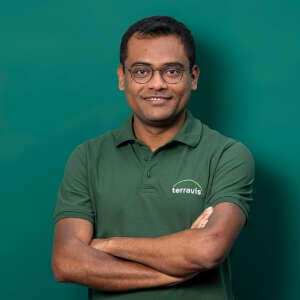
Our consultant specialising in international sustainability certification: Samiran Das
Samiran Das joined our goCerO₂ team at the start of June 2026. With his experience in sustainability certification and greenhouse gas accounting, he will primarily be driving forward the internationalisation of our services. In this interview, he explains why he is passionate about sustainability, what led him to TerraVis, and what opportunities he sees for the future.
Samiran, why don’t you introduce yourself briefly? What’s your professional background?

It was there that I first came into closer contact with greenhouse gas accounting. I was immediately fascinated by the subject because I saw real added value in it. If we want to reduce emissions, we must first understand where they originate and which measures actually make a difference.
Which stages of your career have had a particular influence on your professional journey?
After completing my degree, I spent just over four years working in sustainability consultancy. During this time, I supported clients from a wide range of sectors – from energy companies to coffee producers – and collaborated with partners all over the world.
My time working on the ISCC certification scheme was particularly formative. I not only acted in an advisory capacity but was also involved in the further development of the scheme. As well as gaining specialist knowledge, what I learnt most during this time was just how differently people, markets and cultures operate.
In Japan, for example, work is very structured and formal, whilst in Spain things are often much more relaxed. Understanding these differences and adapting to them is hugely important for successful international collaboration – and it’s also great fun.
What challenges are biogas and biomethane plant operators currently facing?
In my view, the biggest challenge is the increasing complexity of the regulations. There are numerous national and international regulations, certification schemes and reporting requirements. It’s easy to lose track of it all.
Added to this is the fact that operators often have to produce extensive documentation. This requires specialist knowledge and time – and both are often in short supply in day-to-day operations.
Many operators know that these requirements are important, but understandably prefer to focus on running their plants rather than on guidelines and spreadsheets.
Are you interested? We look forward to hearing from you.